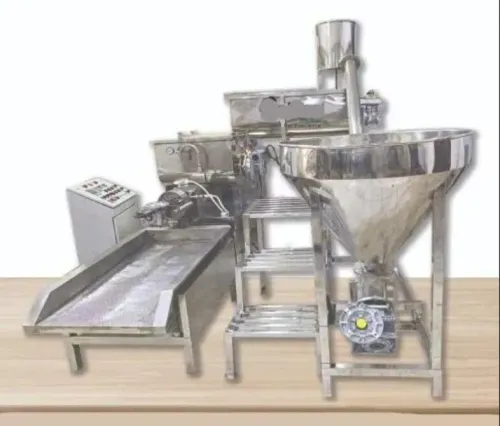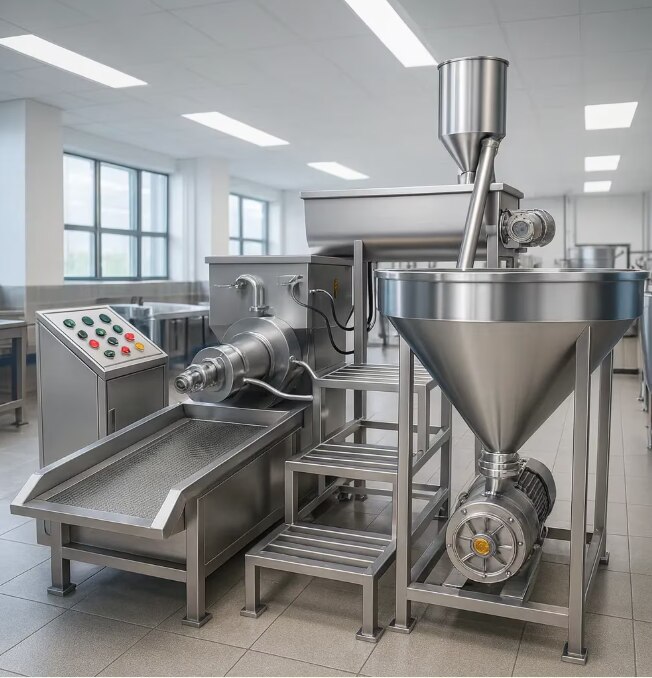
Dough residue, blocked dies, drifting sensors and poorly recorded service work can reduce output long before a machine stops. A practical maintenance system assigns each task to the right person, cleans every product-contact surface safely, tracks wear against evidence and releases the line only after verification.
Key takeaways
- Operators release the line daily; technicians own weekly mechanical maintenance.
- Clean from product-contact parts to drains using a documented lockout sequence.
- Set lubrication and replacement intervals from hours, loads and condition trends.
- Escalate vacuum, pressure, cutting or drying faults beyond operator checks.
How to divide daily, weekly and monthly maintenance work
Assign ownership by risk: operators release the line each day, maintenance technicians control routine mechanical work each week, and external service personnel handle specialist checks each month or when trend data shows deterioration.
1. Daily—operators complete cleaning and sanitation, inspect guards, die and cutter condition, and check for leaks, loose fasteners or unusual noise. Record machine hours, recipe, die identification, feed rate, product moisture, die-head pressure, extruder motor current, product dimensions, cleaning completion and abnormal findings. Do not restart until the operator signs the cleaning release.
2. Weekly—maintenance technicians inspect belts, chains, couplings, bearings, seals, sensors, panel filters, dryer air paths and pneumatic connections. Lubricate only specified points with the correct food-machinery service classification; excess grease can overheat sealed bearings or migrate into the product zone. Record the lubricant, point, technician and parts changed.
3. Monthly—external service personnel review trends, alignment, screw and barrel wear, die condition, cutter timing, pressure and current readings, sensor function, electrical-enclosure sealing and cooling-water scale. They should verify repairs, calibration and safety interlocks before production authorisation, using the manufacturer’s service limits rather than inventing calendar-based replacement intervals.
The record must link cleaning release to production approval and document lubricant, metal fragment, broken-tool or gasket contamination events. In Noida, add humidity, airborne dust, wash-water quality, spare-die corrosion and dryer drift to the review. FSSAI hygiene requirements guide the sanitation programme; they do not replace the equipment maker’s instructions for macaroni production maintenance.
The safe sequence for cleaning an automatic macaroni line
A stop button does not isolate stored energy. Before automatic macaroni machine cleaning, stop the line, isolate and lock electrical, pneumatic, hydraulic and thermal supplies, release pressure, verify zero energy, and wait until the die, barrel and dryer are cool.
1. Remove remaining product from the hopper, mixer, kneader, extruder, die, cutter, trays and conveyors. Take out removable dough-contact parts and place them in a labelled wash area; keep recipe or allergen changeovers separated.
2. Dry-scrape dough and semolina from upstream to downstream, starting at the hopper and ending at the conveyor discharge. Prevent residue from falling into bearings, motors, gearboxes, pneumatic fittings or electrical enclosures.
3. Wash product-contact parts with the approved detergent and water method. Clean the hopper, mixer, kneader, barrel, screw, die face, cutter, conveyor belts and returns, tray joints, dryer surfaces and product-contact guards; do not spray motors, heaters, control panels, VFDs, bearings or sensors.
4. Rinse away detergent, apply the approved sanitiser at its specified concentration and contact time, then drain and dry completely. Do not refit a wet die, screw, guard or conveyor, because trapped moisture supports growth and causes corrosion.
5. Clean utility areas separately with controlled wiping or clean, dry air directed away from food-contact zones. Never use compressed air to scatter flour into bearings, enclosures or clean surfaces.
6. Reassemble guards and parts, verify fasteners and seals, then inspect die faces, cutter guards, conveyor returns, gasket grooves and tray joints. ATP swabs provide rapid soil evidence, not pathogen results; record findings and complete the plant’s microbiological verification.
How to set lubrication, inspection and replacement intervals
Do not assign a replacement date by guesswork. Set each interval from the machine maker’s manual, duty cycle, machine hours, product recipe, and measured wear; use a shorter interval when dust, humidity, wash-water or production load increases risk in Noida.
1. Create a component register for the screw, die, cutter, seals, bearings, belts, chains, couplings and sensors. Record the manufacturer’s limit, material, part number, operating hours, recipe, die identification and approved settings. If no limit exists, establish a baseline after inspection and obtain technical approval before changing it.
2. Lubricate only identified points at the stated quantity and frequency. Use the lubricant classification specified for that point; use an incidental-food-contact product such as NSF H1 where incidental contact is possible, and keep the point physically separated from product surfaces.
Do not grease sealed bearings unless the maker permits it: excess grease raises temperature, damages seals and migrates into the product zone.
3. Inspect against a baseline rather than a calendar alone. Measure screw or die wear, cutter edge condition, seal leakage, bearing temperature and noise, belt or chain tension, coupling alignment, and sensor readings against an independent calibrated instrument. Check dryer air paths, panel filters, enclosure seals and water-cooled parts for dust or scale.
4. Replace a part when it reaches the maker’s wear limit, fails verification, shows damage, or causes a worsening trend—not merely because a date arrived. Keep critical spares dry and traceable, including dies by hole pattern.
Record hours, readings, findings, lubrication, parts changed, technician and post-maintenance verification; this makes automatic macaroni machine maintenance in Noida evidence-based.
Troubleshooting pressure, vacuum, cutting and drying faults
A process fault changes the product and the machine readings together; an instrument fault makes the display disagree with an independent measurement. Record the recipe, die identification, feed rate, die-head pressure, motor current, product moisture and dimensions before changing a component.
- Stop the line safely: isolate electrical, pneumatic, hydraulic and thermal energy, lock each isolation point, discharge pressure, verify zero energy, and wait for hot dies, barrels and dryers to cool. A stop button is not isolation.
- For abnormal pressure or temperature, compare the display with a calibrated gauge or thermometer. Then inspect thermocouple seating, wiring, set-point limits and alarm history. A blocked die, incorrect dough moisture, excessive temperature, worn screw or restricted feed points to a process or mechanical cause when the readings agree.
- For weak vacuum, check hose connections, seals, filters and pump sound, then test vacuum at the chamber with a calibrated gauge. A stable gauge reading with a false display indicates sensing or control trouble; both readings falling indicates leakage, blockage or pump performance.
- For uneven pieces, inspect cutter speed, blade wear, die-face alignment, product feed and coupling condition. Burrs, vibration or length variation that follows shaft position indicates alignment or mechanical wear, not a PLC fault.
- For drying drift, compare air temperature and humidity at the dryer inlet and outlet, confirm airflow, and check product moisture. Equal independent readings with wet product indicate recipe, loading or airflow problems; disagreement sends you to the sensor circuit and controller.
Automatic macaroni machine troubleshooting should end with alarm review, wiring checks and a controlled test run before replacing a PLC input, sensor, controller or die. Record the readings, adjustment and verification.
When to use external macaroni machine servicing
Use external macaroni machine servicing for work that changes alignment, control logic, pressure integrity or thermal performance. Do not let an outside technician begin until electrical, pneumatic, hydraulic and thermal energy is isolated, stored pressure is discharged, hot dies and dryers have cooled, and zero energy has been verified; a stop button is not isolation.
| Job | External support needed when |
|---|---|
| Die, screw or barrel | Output remains uneven after cleaning, or wear, alignment and clearances require measurement |
| PLC, VFD, sensor or control | Alarms persist after wiring, set-point and independent instrument checks |
| Gearbox, coupling or bearing | Noise, heat, vibration, leakage or shaft movement appears |
| Dryer or vacuum system | Temperature, airflow or vacuum drifts beyond the maker’s documented limits |
| Safety circuit or modification | An interlock, guard, recipe control or line layout is changed |
Give the technician machine hours, recipe and die identification, pressure and current readings, alarm history, cleaning completion, lubricant used, parts changed, abnormal findings and previous repair reports. If Shan Engineerings Works supplied the line, request its die drawings, settings and service limits rather than copying figures from another extruder.
Before authorising production, verify:
- Guards, covers, sensors and interlocks operate; restore energy under controlled procedure.
- Product-contact parts are clean, dry and free from lubricant, metal fragments, broken tools and gasket pieces.
- Compare displayed pressure and temperature with calibrated instruments, then run an approved trial batch.
- Record trial output, cut length, moisture or drying result, readings and approval signature. Link this release to the sanitation record and FSSAI hygiene programme.
Related products
 | Pasta Making Machine Automatic Macroni Making Machine Our Automatic Macaroni Making Machine is a fully stainless-steel, industrial-grade pasta processing machine designed to deliver continuous,... View product → |
 | Pasta Making Machine The Macroni Making Machine from SHAN ENGINEERINGS WORKS is a high-efficiency, fully automatic pasta production solution designed for small to... View product → |
Frequently asked questions
Who should handle automatic macaroni machine maintenance in Noida?
Operators should complete daily release checks, maintenance technicians should control weekly mechanical work, and external specialists should handle monthly or condition-triggered checks.
What is the safe sequence for automatic macaroni machine cleaning?
Stop production, isolate electrical and pneumatic energy, remove residual product, clean product-contact parts, rinse or sanitise where permitted, dry fully, and verify reassembly before startup.
How do you set lubrication and replacement intervals?
Use the manufacturer’s lubricant specification and service hours, then adjust intervals from temperature, noise, wear, load and inspection records.
When should you use external macaroni machine servicing?
Call external service personnel for recurring pressure or vacuum loss, unstable cutting, drying deviations, inaccessible drive or control faults, and trend data showing deterioration.
Keywords