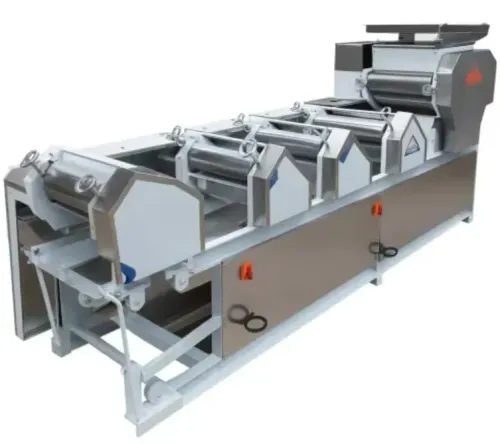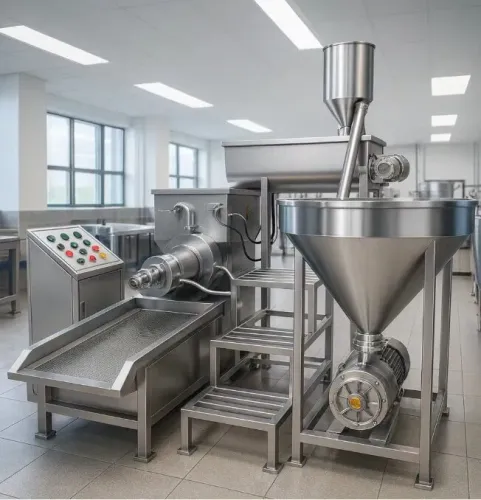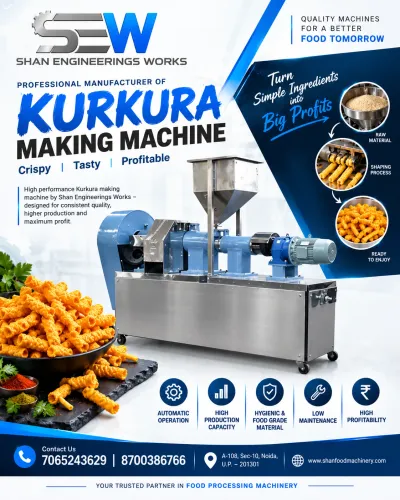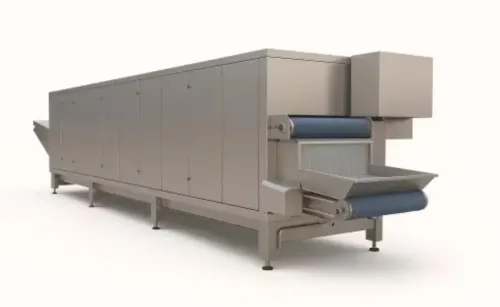
A chips machine becomes worthwhile when manual slicing, frying, seasoning, or packing prevents you from meeting demand with consistent quality. By comparing your product, finished output, available utilities, labour, floor space, and quality controls, you can decide whether to buy a complete line, add selected equipment, or continue with flexible semi-automatic production.
Key takeaways
- Buy automation when manual work limits kilograms per hour or product consistency.
- Choose selected machines if preparation, frying or packing is your only bottleneck.
- Calculate output from potato yield, slice thickness, fryer time and packing speed.
- Make acceptance testing prove capacity, moisture, oil control and seasoning accuracy.
When does a snack manufacturer actually need a chips machine?
Buy a complete line when manual work is holding back finished kilograms per hour, slice uniformity, oil control, seasoning accuracy, pack output, or labour availability. Otherwise, a targeted machine often delivers better returns.
“Chips” does not identify one process. Sliced potato chips need washing, peeling, slicing, frying, de-oiling, seasoning, and packing. Extruded snacks need an extruder and dough feeder; pellets need a forming system and pellet fryer or expander; sev and boondi need dedicated forming equipment.
A chips machine for namkeen business can therefore leave the main production step unresolved.
Use this checklist before approving a complete line:
- Choose separate semi-automatic machines when your small namkeen unit has limited floor area, frequent SKU changes, or uneven demand.
- Consider connected conveying, frying, de-oiling, seasoning, and packing when a contract manufacturer or regional brand has repeat recipes and predictable orders.
- Buy an industrial chips production machine only after checking redundancy, downtime cost, sanitation access, and expansion space—not merely because the quotation says “industrial.”
- Treat labour availability as a capacity constraint when operators manually slice, remove excess oil, season, or fill packs.
- Test the full recipe at its intended throughput; a line that performs with one easy product can fail when slice thickness, seasoning load, or product family changes.
The investment is commercially defensible when the line removes a measured bottleneck and produces saleable, consistent packs. For variable production, automate that bottleneck first.
Should you buy a complete line or only selected machines?
Buy selected machines when manual preparation is reliable and only one stage limits output. An adjustable slicer, dewatering unit, fryer, oil filter, or packing machine can be added in sequence. If the fryer sits idle while workers prepare potatoes, improve receiving through dewatering; if oily film prevents accurate sealing, fix the packing machine instead.
A commercial chips machine in Noida usually automates one or several operations with operator transfers. An industrial line connects material handling and process controls, but it also increases electrical and heat demand, commissioning complexity, sanitation work, and the cost of downtime.
| Option | Best fit | Main trade-off |
|---|---|---|
| Complete line | Repeatable recipes, steady demand, limited labour | Higher utilities, controls, cleaning, and downtime exposure |
| Selected machines | Variable products, smaller space, reliable manual stages | More handling, labour, and transfer points |
| Staged automation | A bottleneck that can be measured now | Later additions need compatible speeds and interfaces |
Map the process before choosing equipment:
- Receive, sort, wash, peel, slice, remove starch, and blanch when required.
- Dewater, fry, filter oil, de-oil, season, cool, detect metal, and package.
Make the quotation identify every conveyor, transfer point, cleaning access, reject route, and changeover task. A vague “complete line” can hide manual carrying, inaccessible tanks, or no route for rejected slices and failed packs. Specify where each later machine will connect, or a cheap first upgrade can block the next one.
How do potatoes and frying choices determine real output?
Real output depends on potato yield and process control, not the feed rate printed for an industrial chips production machine. Before testing, specify potato variety, tuber size, solids content, reducing sugars, storage history, slice thickness, and seasonal variation. Cold storage can raise reducing sugars in some potatoes, creating dark, bitter chips and increasing acrylamide risk.
Test the line with the intended raw material and thickness, then compare:
- Adjustable slicer capacity and slice breakage
- Starch-removal performance and blanching control
- Dewatering efficiency and fryer temperature stability
- Residence time, oil turnover, crumb removal, and filtration
- Vibrating or centrifugal de-oiler performance
Batch frying suits modest output, frequent SKU changes, limited floor space, and operators who can manage recipe changes. Continuous frying suits steady demand with few thickness or recipe changes, where labour savings justify oil circulation, filtration, residence-time control, and a documented oil-change procedure.
| Option | Best fit | Main control burden |
|---|---|---|
| Batch fryer | Modest, variable production | Manual recipe and temperature changes |
| Continuous fryer | Steady, repeat production | Oil circulation, filtration, residence time, and crumb removal |
Run acceptance tests at the intended throughput, not with water or an easy raw material. For chips manufacturing equipment in India, keep oil-condition records and stop using repeated frying oil at 25% total polar compounds. Verify finished output after peeling losses, rejected slices, frying moisture loss, start-up waste, and packing losses—not raw feed alone.
What capacity and site requirements should a Noida buyer calculate?
Calculate raw-potato input from saleable kilograms per day, not the supplier’s feed-rate claim. Divide the finished target by the yield after peeling and trimming, frying moisture loss, rejected slices, start-up waste, seasoning loss, and packing rejects; then divide production time by available hours after changeovers.
A quote for chips manufacturing equipment in India must state finished output at a named slice thickness, potato condition, oil temperature, and target moisture.
Use this site-and-capacity checklist before approving a commercial chips machine in Noida:
- Record connected electrical load, running load, phase, heat source, water consumption, and compressed-air pressure and quality.
- Mark equipment footprint, service clearance, floor loading, drainage points, exhaust or vapour routes, and access for bringing the machine into the building.
- Count operators for sorting, preparation, frying, seasoning, packing, cleaning, and supervision; record cleaning and changeover time separately from production time.
- Plan for starch- and solids-bearing wastewater from washing, peeling, and blanching. Provide screened drains, solids collection, washdown access, and sanitation space, then verify Uttar Pradesh Pollution Control Board consent requirements for the site.
- Ask for spare-parts lead times, recommended stock, warranty exclusions, and response arrangements. Shan Engineerings Works is one local quotation source, but compare suppliers by these specifications rather than brand name.
If the line produces the required kilograms only before cleaning, changeovers, rejects, and downtime, it does not meet your saleable-pack target.
Related product
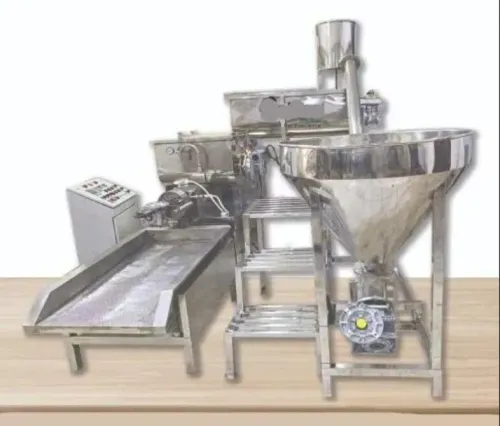
 | Chips Making machine High-Performance Snack Processing Line SHAN ENGINEERINGS WORKS is one of the best food processing machinery manufacturers in Noida, offering a... View product → |
What must the acceptance test prove before you approve the purchase?
A brochure feed rate is not a purchase result. Approve the line only after a factory or site acceptance test runs the actual potato or dough, target slice thickness, seasoning load, fryer temperature, pack size, and intended run length.
1. Measure saleable output, not feed rate. Record finished kilograms per hour, slice breakage, colour, residual moisture, seasoning distribution, rejected packs, and product temperature at packing. Repeat the test long enough to expose heating drift, blockages, operator fatigue, and start-up waste.
2. Test the de-oiling stage at the intended throughput and product temperature. A vibrating or centrifugal de-oiler that performs well empty may leave excess surface oil in production, weakening seasoning adhesion, soiling packs, and increasing perceived greasiness.
3. Check the complete pack. Specify a high-barrier laminate, accurate sealing over oily film, checkweighing, date coding, and nitrogen flushing where needed. Measure seal strength, metal-detector performance, and pack rejection rate; nitrogen cannot rescue a poor seal or wet product.
4. Put acceptance limits and construction details in the purchase order. Identify food-contact material grades and certificates, weld finish, gaskets, lubricants, cleanability, dead-leg avoidance, inspection access, operator training, warranty boundaries, and cleaning and changeover times. Include oil filtration and records confirming the 25% total polar compounds limit for repeated frying oil.
5. Apply one decision rule to chips manufacturing equipment in India: buy the complete line, including a chips machine for namkeen business, only when validated finished output and operating constraints support the investment. Otherwise, automate the bottleneck first.
Frequently asked questions
When does a snack manufacturer need a chips machine?
You need one when manual processing restricts finished kilograms per hour, slice uniformity, oil control, seasoning accuracy, packing output or labour availability.
Should you buy a complete chips line or selected machines?
Buy a complete line when several stages limit production. Select individual machines when one bottleneck, such as slicing, frying or seasoning, is slowing the operation.
How do potatoes and frying choices affect chips output?
Potato variety, dry-matter content, slice thickness, blanching, frying temperature and oil turnover determine yield, cooking time, texture and finished output.
What should a Noida buyer calculate before choosing capacity?
Calculate target finished kilograms per hour, raw-potato requirement, floor area, electrical load, fuel, water, drainage, exhaust, staffing and packing capacity.
What must the machine acceptance test prove?
The test should verify agreed throughput, slice thickness, frying temperature, moisture, oil quality, seasoning distribution, product loss, safety functions and cleanability.
Keywords